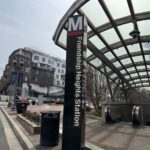
CSG has focused on promoting well-designed transit-oriented development (TOD) in D.C. for several years. A long-time ally of CSG, Washington Regional Network for Liveable Communities (WRN) developed a community education PowerPoint called “Metro In Your Neighborhood” and concentrated community outreach at three priority eastside Metro stations - Fort Totten, Rhode Island Avenue and Minnesota Avenue. In January 2007, WRN merged with the Coalition to take advantage of the economy of scale the two groups could have together. Building on WRN’s work, the Coalition has continued our special focus of making eastside Metro stations safer, healthier places to access transit, live and do business. We worked to implement specific recommendations identified through our focused community outreach over the past several years. Past efforts included organizing three “Walkable Community Workshops,” co-sponsored with D.C. Department of Transportation and Washington Council of Governments for Minnesota Avenue, Fort Totten and Capitol Heights Metro stations.
Rhode Island Avenue Metro station
At Rhode Island Avenue near the Metro station, we convinced DDOT to close up unused curb cuts, narrow overly wide ones and study the possibility of removing rush hour restrictions on parking on the street. All these come out of our work with residents to improve the safety and comfort of the walking environment on the way to the Metro station. After convincing DC Office of Planning to convene and then participating in a working group to assess the need for a pedestrian bridge across the railroad tracks, we won DDOT’s commitment to build a pedestrian bridge across the railroad tracks as part of the Metropolitan Branch Trail plans. Making this crossing safe for people trying to reach the Metro station was a prominent part of our work.
In-Depth Resources
We also succeeded in winning the first ever reduction in subsidized commuter parking in exchange for transit-oriented development and unburdening new housing from obligatory parking costs. Due to our advocacy concerning the Metro parking lot joint development at the Rhode Island Avenue Metro station, the developer will build a smaller, less costly parking garage and share additional parking with residential uses to replace Metro parking. Residents at the new housing will have the choice about if and how much parking they wish to purchase – allowing households who wish to live at the Metro station save on transportation costs by not necessarily owning a car, or having to pay for a parking space – whether or not they own a car.
Fort Totten Metro Station
Access to Fort Totten Metro station is difficult by foot because of missing sidewalks, unpaved paths that are practical shortcuts, auto-oriented land uses, but most of all, heavily trafficked streets and hazardous intersections that make pedestrian crossings uncomfortable at the least and perilous at the worst. To address these issues, we hosted several workshops with community members and government officials which helped build support for traffic calming, repair and installation of pedestrian facilities and a long term fix for the oversized intersection of Riggs Road and South Dakota Avenue, and the redesign of the Metro Police Station to be more pedestrian-oriented. We also fought for and won the installation of a sidewalk in front of the new police station. Since these efforts to promote safe pedestrian access, transit-oriented development, and better urban design, D.C. Office of Planning conducted a small area plan that supports many of the priorities we raised in our earlier work.
Brookland Metro Station
Supporting local efforts for revitalization, we also encouraged DC Office of Planning’s effort to create a vibrant and safe station area around the Brookland Metro station through a small area plan. We also submitted comments to the DC Department of Planning in strong support of developing this Metro station, but also offered a few suggestions for improvement.